You bought the house. You pay the bills.
Your cat still considers it theirs.
And honestly? They're not entirely wrong.
Cats experience their surroundings differently than we do. What looks like a beautiful, comfortable home to us doesn't automatically feel safe to them. Cats care about things like territory, predictability, places to hide, places to climb, and perhaps most importantly, the ability to decide where they want to be.
The good news is that making your home feel more cat-friendly doesn't require turning your living room into a floor-to-ceiling cat playground.
Although your cat would probably vote yes.
Give them options
Cats tend to feel more secure when they have some control over their environment.
That means being able to approach you when they want attention and walk away when they've had enough. It means having more than one comfortable place to rest and somewhere to retreat when the vacuum cleaner makes its deeply offensive weekly appearance.
Sometimes making a cat feel safe is less about what you give them and more about letting them choose.
Think up. And underneath.
There's a reason your cat ignores the expensive bed you bought and sleeps on top of the refrigerator.
Height gives cats a place to observe what's happening around them. Cat trees, sturdy shelves, window perches, and other elevated spots can give them that perspective.
But cats also need the opposite: somewhere to disappear.
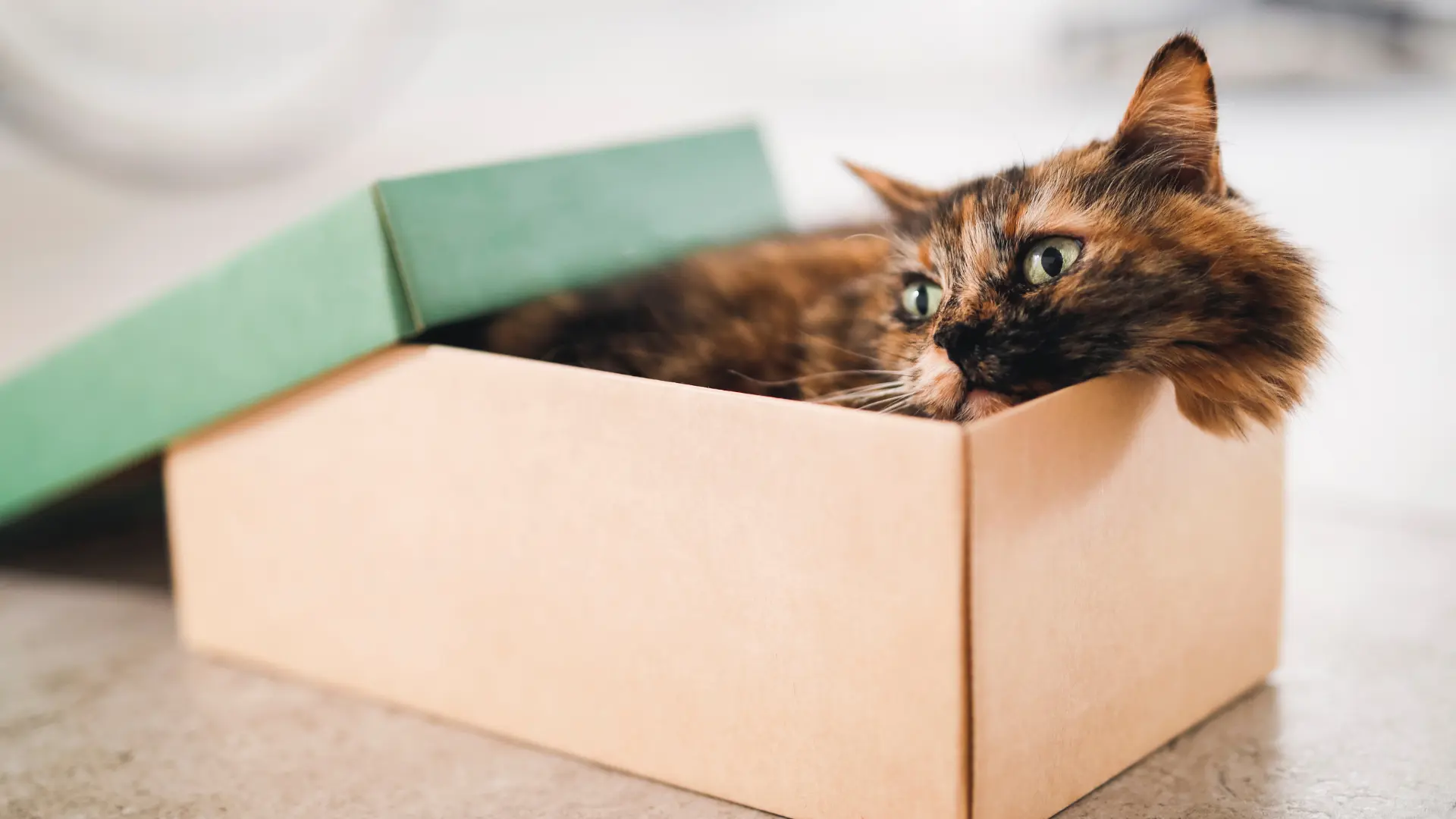
A covered bed, quiet nook, carrier left open, or, naturally, the cardboard box the cat tree arrived in can give them somewhere to retreat when they want space.
Both serve the same purpose: choice.
Let life be a little predictable
Cats are creatures of routine.
They learn when breakfast happens. They know approximately when you come home. And they somehow know you've slept seven minutes past the acceptable breakfast hour before you've even opened your eyes.
Predictable rhythms around meals, play, and quiet time can help their environment feel more secure.
That doesn't mean every day needs to run on a perfect schedule. It just means that, for cats, knowing what usually happens next can be comforting.
Give their instincts somewhere to go
A safe home shouldn't just be comfortable. It should give a cat opportunities to be a cat.
Scratch. Climb. Chase. Pounce. Watch birds through a window for an unreasonable amount of time.
Interactive play, scratching surfaces, climbing opportunities, puzzle feeders, and other forms of enrichment give those natural behaviors somewhere appropriate to go.
And yes, sometimes they'll still choose the couch.
We tried.
Let them set the pace
Maybe the most important thing you can give a cat isn't something you can buy.
It's respect for their boundaries.
Cats communicate constantly through posture, movement, ears, tails, and the simple decision to stay or leave. Paying attention to those signals and allowing a cat to initiate or end an interaction helps build trust.
Especially for a newly adopted or more cautious cat, feeling safe may take time.
Let it.
Because eventually, the cat who spent their first few days underneath the bed might be sleeping upside down in the middle of your living room without a care in the world.
And when that happens, you'll know.
Your house became their home.